


Early Learning - EYP
Developing a Passion for Lifelong Learning
Early Years Programme (EYP) for Children Age 3-5
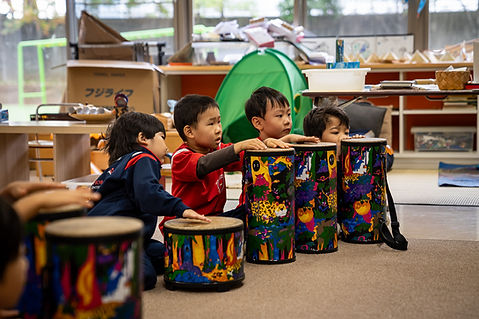
Students can enroll with us in our Preschool, using the IB PYP early years programme after they turn three (3) years old. Our skilled team of educators believes that young children discover and learn most effectively through socializing, playing, and getting involved with a broad range of inquiry experiences.
Hands-On Learning
We offer small groups where learning is hands-on, support is individual, and children come together from across the world, celebrating the many traditions and cultures that unite us. Using the inquiry-based IB Primary Years Programme early years (PYP early years) and influenced by a play-based atmosphere, our educators work with students at problem-solving, questioning, and reflecting, all while taking action at building the foundations for lifelong learning.
Exploring the IB Primary Years Programme (PYP)
The International Baccalaureate’s PYP early years (EYP) will be followed until Kindergarten. The PYP early years encourages and inspires learners to lead a fulfilling and constructive life as global citizens of a changing world. The basis for its foundations is an active understanding and learning experience, creating space for creative problem-solving within genuine perspectives, and a profound acceptance of the individuality and capabilities of each learner.
Creative Problem-Solving and Global Citizenship
Children are inspired to ask, “Why?” and develop links between real life and their pursuits at school. Each child’s abilities are maximized to their highest potential in a nurturing, safe, stimulating, and creative environment. Materials in the classrooms are exclusively tailored to meet their needs and ignite their young minds. Each child is appreciated, valued, and empowered to learn and understand who they are, what they can become, and how to benefit the world in its entirety.


Draws Inspiration from Reggio Emilia Approach
We take elements from Reggio Emilia Approach, which pairs beautifully with the IB. Both approaches see the child as capable, curious, and central to their own learning.
Our teachers guide, observe, provoke thinking, and help children build long and short-term projects. It’s learning that grows with them not learning that is handed to them. In short we have strong academic standards, paired with inquiry, play, exploration, relationships, and real-world learning.
Students are always thinking of ways to support the community around them.
Our goal is simple:
Children who don’t just learn but love learning, are always looking at ways of giving back to the community and developing International mindedness
Pre-School & Pre-Kinder Half-Day Program in Yokohama
Horizon Japan International School offers a flexible half-day early learning program in Yokohama for Pre-School and Pre-Kinder students. Designed for young children taking their first steps into an international school environment, the program provides a warm, play-based, and English-speaking setting where students build confidence, develop social skills, and begin their learning journey.
Through age-appropriate activities, caring teachers, and a nurturing classroom environment, children are introduced to daily routines, communication, creativity, and early inquiry-based learning.
The half-day program runs from 8:30 to 11:45.
Program availability:
Pre-School: Full year
Pre-Kinder: Term 1 only
Ideal for families looking for an international preschool in Yokohama, English preschool near Yokohama Station, or a gentle introduction to early childhood education in Kanagawa and the Tokyo area.


Frequently Asked Questions.
As you move through the admissions process, you may have questions. Here we’ve answered the most common ones to help make your experience with Horizon Japan International School clear, smooth, and reassuring.
1. How can I apply to an international school in Yokohama?
Applying to an international school in Yokohama can feel like a big step, but at Horizon Japan International School (HJIS), the process is designed to be clear and supportive for every family.
Most families begin by contacting the admissions team or booking a school tour, where you can learn more about the school’s approach, curriculum, and community. After this, you will be guided through completing an online application form and submitting the required documents, such as school reports and identification.
Depending on your child’s age, they may be invited to take part in an assessment or informal interview. This helps ensure that each student is placed in an environment where they can succeed and feel confident.
Once all steps are completed, the school will share an admissions decision and support you through the next stages of enrollment.
2. What is the admissions process for Horizon Japan International School?
From your first inquiry, the admissions team works closely with you to answer questions, explain expectations, and guide you through each requirement.
Families are encouraged to connect early, whether through a campus visit or an online meeting, to get a genuine sense of the school community. Throughout the process, communication is open and responsive, ensuring that parents feel informed and confident in their decisions.
Because HJIS is an IB Continuum World School serving students from early learning through high school, the admissions approach is designed to support smooth transitions at any age or entry point.
The goal is not only to complete an application, but to help each family feel welcomed, prepared, and confident about joining the Horizon community.
3. How can families visit Horizon Japan International School before applying?
Families interested in visiting Horizon Japan International School (HJIS) can begin through the Inquiry Form or the Visit / Tour option available on the HJIS website.
A visit is a helpful way to learn more about the campus, school environment, admissions process, and daily life at HJIS. For families who are overseas or relocating to Japan, the Virtual Tour is also available and allows families to explore the school environment online.
Prospective families may also consider attending an Open House, where they can learn about the school’s IB programmes, community, admissions process, and student experience.
4. How can families contact Horizon Japan International School?
Families can easily contact Horizon Japan International School (HJIS) in Yokohama through multiple channels, including phone, email, and the school’s official online inquiry form.
-
Main Office: +81-45-624-8717
-
General Email: info@horizon.ac.jp
-
Admissions Inquiries: Official online inquiry form
For admissions-related questions, school tours, or enrollment guidance, families are encouraged to begin through the dedicated inquiry form to ensure they are connected with the appropriate admissions team.
Whether you are exploring enrollment, scheduling a campus visit, or seeking relocation support in Yokohama or Tokyo, HJIS provides clear and responsive assistance throughout the process.
-
For all admissions-related inquiries, families are encouraged to begin through the official inquiry form on the HJIS website.
5. What curriculum does HJIS follow?
Horizon Japan International School (HJIS) is an IB Continuum World School, offering internationally recognized programmes from early learning through high school.
The IB curriculum focuses on inquiry-based learning, critical thinking, and global perspectives to prepare students for future academic pathways.
8. Are there after-school activities available for students?
Horizon Japan International School (HJIS) in Yokohama offers a wide range of extracurricular activities, including sports, arts, and enrichment programmes. These activities are designed to support students’ personal development, interests, and social growth beyond the classroom, and are available across different age groups.
6. What language is used for teaching at HJIS?
English is the primary language of instruction at Horizon Japan International School (HJIS). Students develop strong English communication skills within a diverse and international environment.
Japanese is supported across all grade levels, with instruction tailored to each student’s ability. In secondary school, students also have the opportunity to study Spanish as part of the curriculum.
9. Is transportation available for students at Horizon Japan International School?
Horizon Japan International School (HJIS) in Yokohama provides school transportation options for families in Yokohama and surrounding areas.
Routes and availability may vary, so families are encouraged to contact the admissions team for details.
7. Does HJIS offer support for students new to English?
Students who are developing their English are supported through structured programmes at Horizon Japan International School (HJIS) in Yokohama. This includes English as an Additional Language (EAL) support, helping students build confidence and access the curriculum effectively.
In addition, HJIS provides broader learning support tailored to individual needs.
10. What kind of school community can families expect at Horizon?
The community at Horizon Japan International School in Yokohama is diverse, welcoming, and internationally minded. Students and families from many cultural backgrounds come together, creating an environment where everyone feels supported and encouraged to grow.