


STUDENT LIFE
Expeditions
at HJIS
Learning beyond the classroom through service, culture, leadership, and real-world experience.
Preparing a Community of Lifelong Learners.
Learning That Moves Beyond the Classroom
Every year HJIS expeditions are an important part of how students grow as learners, leaders, and global citizens. From local outdoor learning in Japan to international service-learning experiences, our students are encouraged to step outside the classroom, engage with new communities, and reflect on their role in the world. Expeditions are more than field trips. They are meaningful learning experiences that take students beyond the classroom and into the world around them.
Expeditions at HJIS may include service trips, cultural immersion, outdoor education, leadership camps, academic field studies, and community-based experiences. Each journey is designed to help students build independence, empathy, resilience, collaboration, and international-mindedness.
As students grow, their expeditions grow with them. From discoveries in EYP to inquiry-based exploration in PYP, service and challenge in MYP, and leadership, reflection, and impact in DP.
EYP - Early Learning School Expeditions

MYP Middle School Expeditions

PYP - Elementary School Expeditions

DP - High School Expeditions

Discovering Where Food Comes From
Food, farming, curiosity, and taste.
Our Early year learners visit Nikkawa Farm to explore how strawberries grow. Inside the greenhouse, children observe the plants, ask questions, pick fresh strawberries, and enjoy tasting what they have harvested.
This experience helps students connect with where food comes from while developing curiosity, observation skills, and appreciation for nature.
EYP
First steps into the world
In EYP, expeditions look different from the journeys students take in the older grades. Our youngest learners may not yet travel far, but they still step out into the world with curiosity, excitement, and wonder.
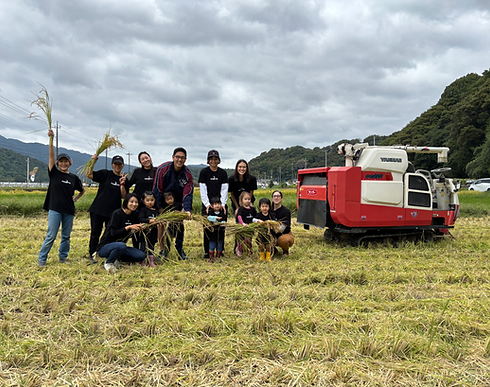
Through visits to farms, rice fields, streams, parks, and the local community, children begin to discover that learning happens everywhere. They observe nature, ask questions, use their senses, care for living things, and begin to understand the world around them through real experiences.
Students may take part in:
-
Local walks and community exploration
-
Park and nature visits
-
Animal and outdoor learning experiences
-
Seasonal learning activities
-
Cultural celebrations and on-campus discovery moments
These experiences help children build confidence, social skills, curiosity, and a sense of belonging.
EYP: Preschoolers, Pre-Kindergarten & Kindergarten

Overnight Camp
Learning, Teamwork & Independence
Grade 4 & Grade 5 students take part in an overnight camp designed to extend learning beyond the classroom through nature, outdoor education, and shared experiences.
During the camp, students immerse themselves in a natural environment, explore local ecosystems, participate in outdoor activities, and build stronger connections with their classmates.
This experience helps students develop confidence, resilience, teamwork, and a deeper appreciation for learning in the world around them.
Highlight line: Outdoor education, teamwork, independence, and lasting memories.
PYP
Primary school: Exploration, Inquiry & Action
In the Primary Years Programme, expeditions help students connect classroom learning with the real world. As students move through Grades 1 to 5, they begin to explore ideas through direct experience, hands-on inquiry, community connections, and learning beyond the classroom.
These experiences are closely connected to the PYP Units of Inquiry. Students may visit museums, science centres, cultural spaces, outdoor learning environments, community organizations, and other places that help them deepen their understanding of the concepts they are studying. Through these opportunities, students learn that knowledge is not limited to books or classrooms.
PYP expeditions also support the development of important learner qualities. Students practice asking thoughtful questions, collaborating with classmates, communicating ideas, solving problems, taking responsibility, and reflecting on their learning. As they grow older, these experiences become more independent and action-focused, helping students prepare for the PYP Exhibition and the transition into Secondary School.
Forest Adventure
Outdoor challenge, teamwork, courage, and resilience.
At Forest Adventure, MYP students step into nature for an active outdoor learning experience that challenges them physically, socially, and personally.
Through climbing, balancing, ziplining, and moving through forest-based obstacle courses, students are encouraged to communicate, support one another, solve problems, and build trust. The experience gives students the chance to step outside their comfort zones in a safe and structured environment while developing confidence and resilience.
This type of adventure learning helps students understand that growth often happens when they try something new, take responsible risks, and work together with others.
MYP
Middle School: Adventure, Service, Wellbeing, and Real-World Discovery
In MYP, expeditions become more independent, challenging, and connected to the wider world. Students begin to travel further, take on greater responsibility, and experience learning through action, service, reflection, and adventure.
Through field trips, outdoor learning, service trips, wellbeing retreats, and Expedition Week, students discover that learning happens through real experiences. They explore new environments, work with classmates, reflect on global and local issues, build resilience, and begin to understand how their choices and actions can make a difference.
Students may take part in:
-
Adventure and outdoor learning experiences
-
Expedition Week journeys
-
Service Trips
-
Wellbeing retreats, mindfulness experiences, and reflection activities
-
Field trips connected to culture, nature, history, science, and real-world inquiry
Discovering Where Food Comes From
Food, farming, curiosity, and taste.
Our Early year learners visit Nikkawa Farm to explore how strawberries grow. Inside the greenhouse, children observe the plants, ask questions, pick fresh strawberries, and enjoy tasting what they have harvested.
This experience helps students connect with where food comes from while developing curiosity, observation skills, and appreciation for nature.
DP
First steps into the world
In EYP, expeditions look different from the journeys students take in the older grades. Our youngest learners may not yet travel far, but they still step out into the world with curiosity, excitement, and wonder.
Through visits to farms, rice fields, streams, parks, and the local community, children begin to discover that learning happens everywhere. They observe nature, ask questions, use their senses, care for living things, and begin to understand the world around them through real experiences.
Students may take part in:
-
Local walks and community exploration
-
Park and nature visits
-
Animal and outdoor learning experiences
-
Seasonal learning activities
-
Cultural celebrations and on-campus discovery moments
These experiences help children build confidence, social skills, curiosity, and a sense of belonging.
EYP: Preschoolers, Pre-Kindergarten & Kindergarten


Frequently Asked Questions.
As you move through the admissions process, you may have questions. Here we’ve answered the most common ones to help make your experience with Horizon Japan International School clear, smooth, and reassuring.
1. Do students go on field trips at HJIS?
Yes. Students at Horizon Japan International School (HJIS) in Yokohama take part in age-appropriate field trips, outdoor learning experiences, camps, museum visits, cultural activities, and service opportunities throughout the school year.
These experiences are planned to support learning, not simply as one-day events. Students use field trips to explore real places, ask questions, make observations, and connect classroom learning with the world around them. At HJIS, learning beyond the classroom is part of how students develop curiosity, confidence, independence, and a stronger connection to their community.
2. How are field trips connected to classroom learning?
Field trips at HJIS are connected to classroom learning through inquiry, reflection, and real-world application. Students do not only visit a place; they use the experience to deepen their understanding of a unit, subject, or concept they are studying in school.
In the Primary Years Programme (PYP), trips often connect to Units of Inquiry. In the Middle Years Programme (MYP), students may connect trips to interdisciplinary learning, subject projects, or Service as Action. In the Diploma Programme (DP), experiences may support CAS, leadership, research, and global engagement. This helps students see that learning is not limited to textbooks or classrooms.
3. Do students experience Japanese culture and the local community?
Yes. As an international school in Yokohama, HJIS gives students opportunities to experience Japan, the local community, and the wider cultural environment around them.
Through field trips, local visits, cultural experiences, service learning, and community events, students build a deeper understanding of the country they live in. These experiences help students develop respect for Japanese culture while also reflecting on their own identities and international backgrounds. For many families, this is an important part of choosing an international school in Japan: students learn globally while staying meaningfully connected to their host country.
4. Does HJIS offer overnight camps or outdoor learning experiences?
Yes. Selected grade levels may take part in overnight camps, outdoor learning experiences, or extended trips when appropriate for their age and programme.
These experiences help students grow in independence, teamwork, responsibility, and resilience. Away from the regular classroom setting, students learn how to cooperate with others, manage routines, take on new challenges, and build stronger friendships. Camps and outdoor learning experiences are often some of the most memorable parts of school life because they help students grow both socially and personally.
Other Questions:
5. Is the summer school suitable for families living in Tokyo?
Absolutely. Many families from Tokyo join the Horizon Summer School because of its convenient Yokohama location, accessible commute options, and international environment.
Please check the latest Summer School bus information or contact summerschool@horizon.ac.jp.
For other commute options:
8. Are there after-school activities available for students?
Horizon Japan International School (HJIS) in Yokohama offers a wide range of extracurricular activities, including sports, arts, and enrichment programmes.
These activities are designed to support students’ personal development, interests, and social growth beyond the classroom, and are available across different age groups.
6. What language is used for teaching at HJIS?
English is the primary language of instruction at Horizon Japan International School (HJIS). Students develop strong English communication skills within a diverse and international environment.
Japanese is supported across all grade levels, with instruction tailored to each student’s ability.
In secondary school, students also have the opportunity to study Spanish as part of the curriculum.
9. When is the admissions open for HJIS in Yokohama?
Admissions at Horizon Japan International School in Yokohama are open throughout the year through our rolling admissions policy.
Families may apply at any time, and students may enroll during the school year if space is available in the appropriate grade level and all admissions requirements have been successfully completed.
7. Does HJIS offer support for students new to English?
Students who are developing their English are supported through structured programmes at Horizon Japan International School (HJIS) in Yokohama. This includes English as an Additional Language (EAL) support, helping students build confidence and access the curriculum effectively.
In addition, HJIS provides broader learning support tailored to individual needs.
10. What kind of school community can families expect at Horizon?
The community at Horizon Japan International School in Yokohama is diverse, welcoming, and internationally minded.
Students and families from many cultural backgrounds come together, creating an environment where everyone feels supported and encouraged to grow.

_edited.png)


